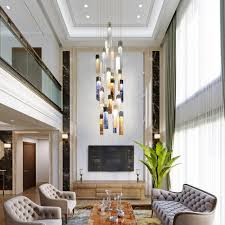
The Layered Light Revolution Explored
Gone are single-ceiling-light solutions that cast gloomy shadows. Today’s interiors thrive on strategic vertical layering – particularly between modern living room wall lights and kitchen island pendant lights. This tandem creates depth while defining functional zones in open-plan spaces. The psychology is profound: lower-level wall lights foster intimacy in seating areas, while suspended pendants establish social hubs over islands. This tiered approach also accommodates circadian needs – warmer 2700K wall lights for evening relaxation, cooler 4000K task lighting for daytime cooking. It’s illumination designed for human rhythms.
Living Room Liberation Tactics
Asymmetric modern living room wall lights sculpt empty walls into curated galleries. Angled spotlights highlight art without glare, while backlit panels create floating effects that expand small spaces visually. The magic? They liberate floor space occupied by lamps while adding depth – essential in compact urban dwellings. For media walls, consider horizontal LED strips concealed behind coving: this indirect wash reduces screen eye strain. Placement innovation matters too; flanking chimney breasts at 3/5 height creates balanced focal points, while corner-mounted rotating spotlights offer flexible accenting for rotating art displays.
Kitchen Theatre Production Values
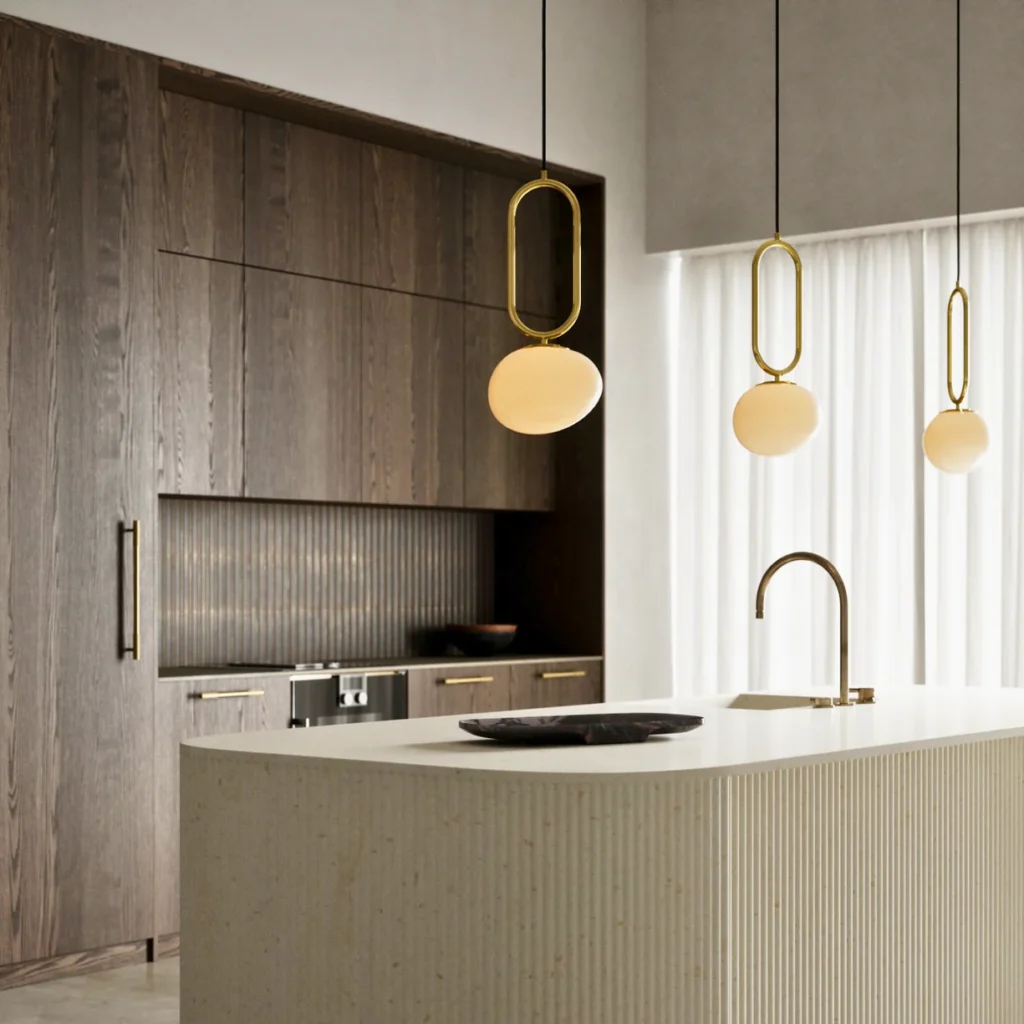
Suspended above islands, triple kitchen island pendant lights combine task lighting with drama. Opt for 30-34cm diameter drum shades at 75cm above counter height – this prevents head bumps while ensuring chopped herbs are vividly illuminated. Matte black or aged brass finishes contrast beautifully with marble or quartz worktops, turning meal prep into visual performance. For culinary enthusiasts, integrated downlighters within pendants provide focused workspace brilliance. The trend towards organic materials – rattan shades, ceramic globes, or recycled glass – softens hard kitchen lines while adding artisanal character to functional zones.
Material Continuity Strategies
Linking rooms requires thoughtful repetition without monotony. Brass accents in living room sconces echoed in kitchen pendants create cohesion. Similarly, smoked glass in both zones establishes rhythm. This subtle dialogue unites spaces without sacrificing individuality. Extend the narrative through bulb consistency: matching filament styles or colour temperatures builds subconscious harmony. For industrial lofts, blackened steel and clear glass might dominate; in Scandinavian schemes, bleached oak and opal glass create flow. The most successful open plans use lighting materials as “visual ligaments” connecting distinct areas.
Scale & Proportion Masterclass
Lighting suffers chronic size underestimation. For large-section sofas, oversized modern living room wall lights (50cm+ height) provide balance – small sconces dwarfed by chunky furniture appear apologetic. Above sprawling islands, cluster smaller pendants at varying heights (20-40cm differentials) for organic impact. The golden rule: pendant diameter should be 1/3 to 1/2 the island’s width. Vertical spaces demand similar consideration; ceilings under 2.4m suit flush wall mounts, while vaulted spaces crave elongated vertical kitchen island pendant lights to emphasise height. Proportional lighting prevents spaces feeling either cluttered or cavernous.
Future-Forward Flexibility Systems
Integrated LED modern living room wall lights with Bluetooth colour tuning (2200K-6500K) adapt to activities – candlelight warmth for entertaining, cool white for spring cleaning. Smart motion sensors can trigger pathway lighting when entering darkened rooms. In kitchens, pendants with USB charging ports in the canopy merge function with form. The true innovation lies in invisible tech: wireless power transmission enables cordless kitchen island pendant lights floating beneath plaster ceilings – a minimalist dream realised. This seamless fusion of design and technology creates responsive environments that anticipate needs while maintaining aesthetic purity.