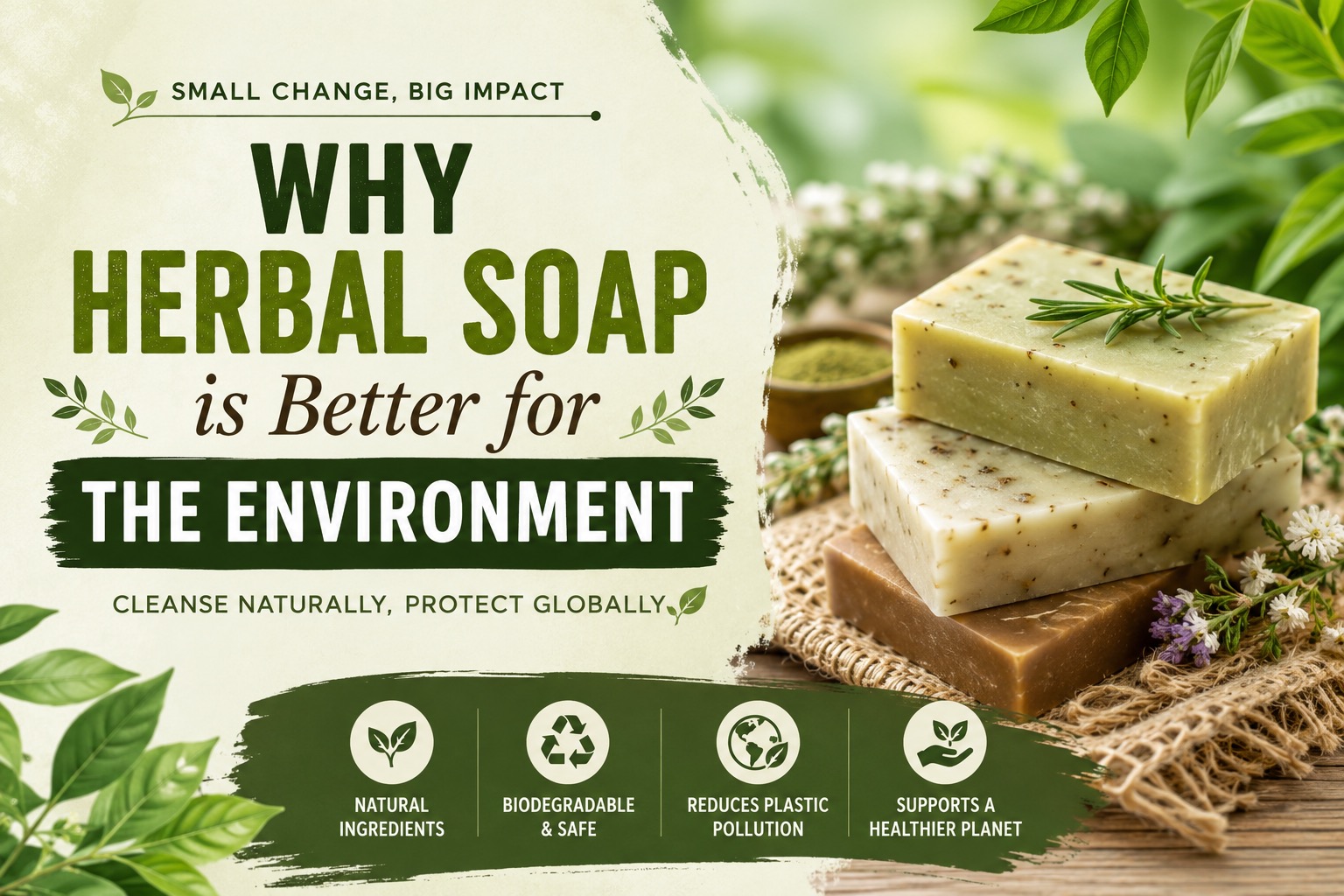
Most people start their day with a shower or a bath. You likely reach for a colorful plastic bottle filled with liquid soap without thinking twice about it. You might trust that it cleans your skin, but have you ever considered what it does to the earth? Those bright, convenient bottles often contain synthetic ingredients that wash right down the drain and into our water systems. Herbal soap is better for the planet and offers a simple, effective way to reduce your daily environmental impact.
The Chemical Cascade: What’s in Your Standard Bar or Bottle?
Look at the back of a standard shower gel or drugstore soap bottle. You will see a long list of words that are hard to read, like sulfates, parabens, and triclosan. These chemicals are cheap to produce, but they are incredibly harsh on the water supply.
They strip your skin of natural moisture and leave behind residue that aquatic plants and fish cannot process. Many of these synthetic detergents do not break down easily. They persist in rivers, lakes, and oceans long after you rinse them off. Choosing a natural herbal soap is a direct way to stop these chemicals from entering the environment. It is a small change that helps keep our waterways cleaner.
Introducing the Earth-Friendly Alternative: Defining Herbal Soap
Herbal soap is made from plant-derived ingredients. It relies on natural oils, essential oils, and botanical extracts rather than lab-made additives. By using ingredients sourced from nature, these soaps start from a place of sustainability. They are designed to nourish the skin while respecting the earth. When you wash with herbal soap, you are choosing a product that is biodegradable and far less taxing on the planet.
Ingredient Integrity: The Power of Plant-Based Formulations
The magic of herbal soap lies in its ingredients. Commercial soap makers often use petroleum-derived surfactants to create a lather. Herbal soap makers go back to basics, using plant fats that perform better and are safer for everyone.
Biodegradable Bases: Goodbye to Petrochemicals
Traditional herbal soaps use saponified natural oils. Think of olive oil, coconut oil, and shea butter. When these oils react with lye, they turn into soap. This process is time-tested and creates a product that breaks down naturally in the environment. Unlike petroleum-derived surfactants that act like pollutants, natural soap bases vanish harmlessly into the water cycle. This is a massive win for the health of our water systems.
Natural Fragrance vs. Synthetic Perfumes
Commercial soaps often use artificial fragrances. These are loaded with phthalates, which are known to be problematic for human health and the environment. These scents can linger in water systems for a long time. Herbal soaps use essential oils extracted from flowers, leaves, and barks. These oils provide a natural, pleasant scent in the shower, and more importantly, they evaporate safely. They do not persist in the environment or cause the same issues as synthetic perfumes.
Infusions from the Earth: The Role of Botanicals and Clays
Many herbal bars contain extra ingredients that do more than just clean. You might find dried lavender, rosemary, activated charcoal, or various clays. These are sourced directly from the earth. They provide natural exfoliation and skin benefits without the need for microplastics or harsh chemical scrubs. Using these botanicals turns a simple wash into a ritual that connects you to nature.
Minimizing Plastic Pollution: Packaging and Longevity
Liquid soap and body wash are the biggest contributors to plastic waste in the bathroom. Every time you finish a bottle, it goes in the trash, and most of that plastic never gets recycled. Herbal bar soap changes this dynamic.
The Bar Soap Advantage: Zero to Minimal Plastic Footprint
Millions of plastic soap bottles end up in landfills or the ocean every year. Switching to bar soap removes this waste stream almost entirely. High-quality herbal bars typically come wrapped in simple paper or compostable cardboard. When you choose these products, you are opting out of the single-use plastic cycle. This simple switch prevents hundreds of plastic bottles from being manufactured and discarded over your lifetime.
Longevity and Reduced Consumption
High-quality natural oils make for a harder, longer-lasting bar of soap. Synthetic bars are often filled with water and fillers that make them dissolve quickly in the shower. A good herbal soap bar is concentrated. Because it lasts longer, you buy less often. This reduces the carbon footprint associated with shipping and manufacturing new bars. You get more value for your money while buying less plastic.
Actionable Tip: Maximizing Bar Soap Life
To make your herbal soap last as long as possible, keep it dry between uses. Avoid letting your bar sit in a puddle of water. Use a wooden or bamboo soap dish that allows for airflow and drainage. This simple step keeps the bar firm and prevents it from becoming mushy. By caring for your soap properly, you waste less product and save money in the long run.
Ethical Sourcing and Supporting Biodiversity
The impact of your soap goes beyond the shower. It is about the entire supply chain. When you buy from eco-conscious makers, you support farming practices that respect the land.
Sustainable Farming of Key Botanical Inputs
Industrial soap production often relies on large-scale, destructive farming practices to source cheap ingredients. Herbal soap makers are usually much more selective. They prefer essential oil crops and plant oils grown with sustainable methods. This supports better soil health and preserves local biodiversity. It is a more responsible way to interact with agricultural resources compared to massive, chemical-heavy operations.
Cruelty-Free Commitment: Animal Welfare in Production
Large chemical corporations often test their ingredients or finished products on animals. This is a common practice that many shoppers want to avoid. Artisanal and herbal soap makers almost universally reject this approach. They prioritize cruelty-free standards from the start. When you choose these soaps, you support a movement that values kindness to animals throughout the entire production cycle.
Supporting Local and Small-Scale Producers
When you buy herbal soap, you are often supporting small businesses. These makers are usually passionate about the environment. They do not have the same massive chemical footprint as giant corporations. At Sandhai.ae, we curate our selection to highlight these ethical, environmentally conscious brands. By purchasing through our marketplace, you are voting with your wallet for cleaner practices and local economies.
Water Quality Protection: From Sink to Stream
What goes down your drain matters. Everything you use eventually finds its way back into the water supply. Herbal soap protects the health of our freshwater and marine environments.
The Impact of Non-Biodegradable Surfactants on Aquatic Life
Synthetic foaming agents are effective at cutting grease, but they are destructive to aquatic ecosystems. They can disrupt the natural balance of lakes and rivers. They can harm the skin of fish and interfere with the oxygen levels in the water. Because natural soaps are fully biodegradable, they break down into simple, harmless substances before they can cause this kind of damage.
Palm Oil Dilemma and Responsible Alternatives
Palm oil is a common ingredient in many soaps, but its production is linked to deforestation. Reputable herbal soap producers are very aware of this issue. They either use certified sustainable palm oil or avoid it entirely in favor of olive, coconut, or shea butter. When you shop at Sandhai.ae, you can find transparency about ingredients. This lets you support companies that actively choose alternatives to avoid contributing to forest loss.
Greywater Safety
Many people in water-conscious regions use greywater systems to water their gardens. If you use soap filled with synthetic chemicals, that water is not safe for your plants. Natural herbal soap is generally safe for these systems. Because the ingredients are simple and biodegradable, your shower runoff can potentially nourish your landscape without introducing harmful chemicals to your soil.
Making the Switch: Your Journey to Greener Cleansing
Transitioning to natural soap is a simple way to improve your environmental footprint. You do not need to overhaul your entire life to make a difference. Start with your soap.
Identifying Truly Natural Products
When you look for new soap, check the label. You want to see ingredients you recognize, like oils and plant extracts. Look for terms like “saponified oils” and the absence of SLS or SLES. Keep an eye out for minimal, plastic-free packaging. If you can understand the list of ingredients, you are on the right track.
Curated Selection at Sandhai.ae
It can be hard to know which brands are truly eco-friendly. We do the work for you at Sandhai.ae. We vet our suppliers to ensure they meet high standards for ingredient purity and environmental compliance. You can shop with confidence knowing that our products are vetted for their positive impact. We make it easy for you to switch to better products that do not harm the planet.
The Immediate Impact of Conscious Purchasing
Every time you choose a natural herbal bar over a synthetic bottle, you make a tangible difference. You are reducing plastic waste. You are stopping harsh chemicals from entering the water. You are supporting farmers and small makers who care about the earth. This is a powerful, daily act of environmental stewardship.
Conclusion: Clean Skin, Clean Conscience
Your daily wash is an opportunity to make a positive choice. Herbal soaps help you reduce plastic waste, protect the water quality in your local ecosystem, and support sustainable, ethical farming. These are not just products; they are part of a conscious lifestyle. Visit Sandhai.ae today to browse our curated selection of herbal soaps. It is an easy switch that makes your routine better for you and the planet. Clean skin and a clean conscience start with the soap you choose.