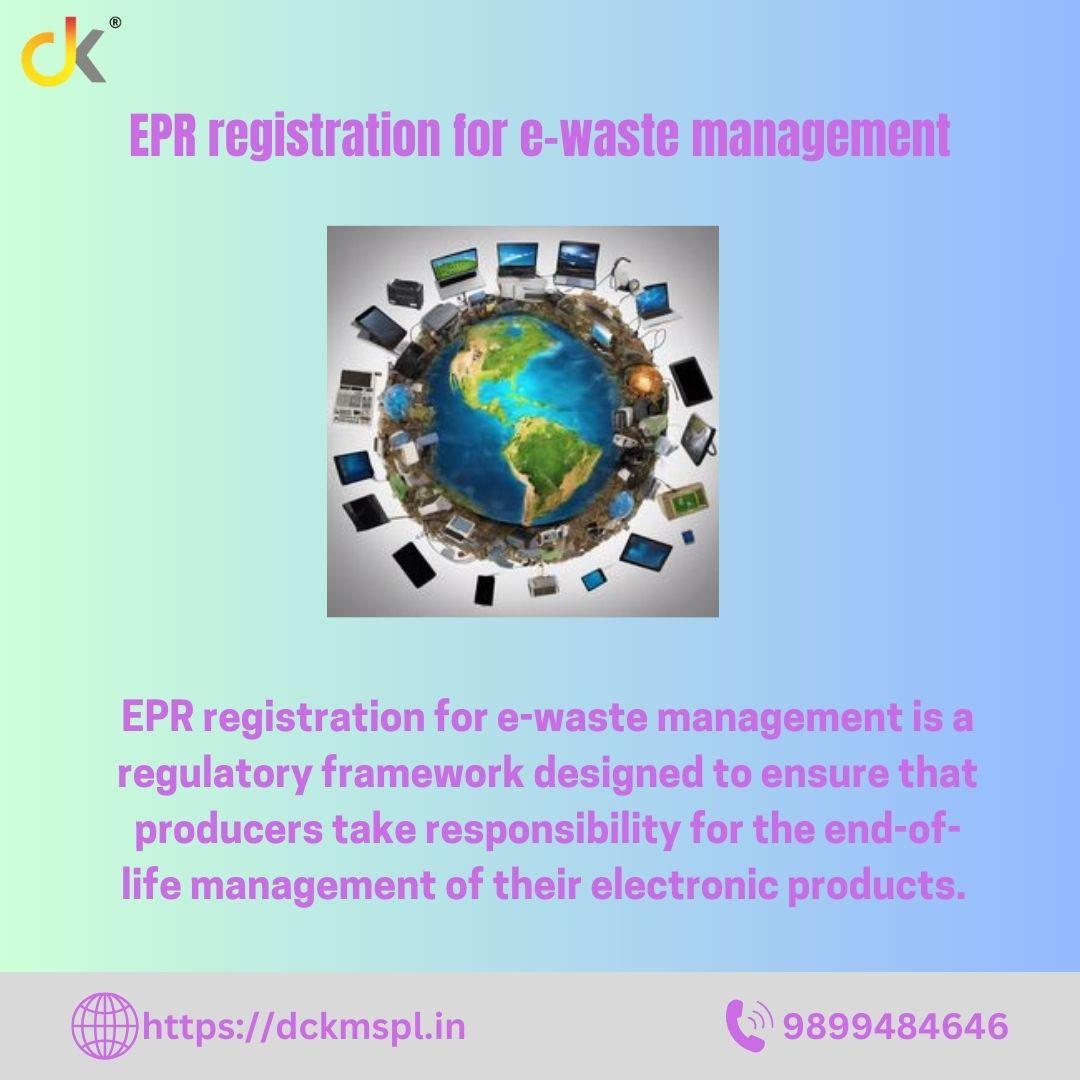
Electronic waste (e-waste) is one of the fastest-growing waste streams globally. With the rapid growth of technology and the constant demand for new electronic devices, e-waste has become a pressing environmental issue. The improper disposal of e-waste can lead to harmful environmental consequences, including the release of toxic substances like lead, mercury, and cadmium into the environment. To address this issue, governments worldwide have introduced Extended Producer Responsibility (EPR) regulations, including India under the E-Waste (Management) Rules, 2016.EPR registration for e-waste management is a policy approach that holds producers responsible for the entire lifecycle of their products, from design to disposal.
Understanding EPR (Extended Producer Responsibility)
EPR registration for e-waste management is a policy framework that shifts the responsibility of managing e-waste from the end-user to the producer. This means manufacturers, importers, and sellers of electronic products are responsible for ensuring that their products are safely collected, processed, and disposed of once they reach the end of their lifecycle. This encourages the development of more environmentally friendly products and promotes recycling and reuse.Under EPR, producers are required to establish systems for the collection and recycling of e-waste.
EPR Registration Process for E-Waste Management
EPR registration is mandatory for all producers, importers, and brand owners of electrical and electronic equipment (EEE) in India. The process involves several key steps:
- Submission of EPR Plan
As part of the registration, companies must submit an EPR plan outlining how they intend to collect, store, transport, and recycle their e-waste. The plan should also demonstrate how the producer intends to ensure the safe disposal of hazardous materials. It must include the list of authorized recyclers or collection centers the company will be working with. - Approval of EPR Authorization
After reviewing the EPR plan and ensuring that it complies with all regulations, the CPCB or SPCB grants EPR authorization. This approval gives producers legal authority to handle e-waste under the E-Waste (Management) Rules, 2016. - Implementation of the EPR Plan
Once the EPR authorization is obtained, the producer must implement the approved plan. This includes setting up collection centers or working with authorized e-waste recyclers to ensure the proper recycling or disposal of end-of-life electronic products.
Benefits of EPR Registration for E-Waste Management
- Compliance with Legal Regulations
EPR registration ensures that companies comply with the legal framework governing e-waste management. The E-Waste (Management) Rules, 2016, mandate that companies take responsibility for the end-of-life disposal of their products, and non-compliance can result in penalties, fines, and potential bans on production or imports. - Corporate Social Responsibility (CSR) Enhancement
EPR contributes to a company’s corporate social responsibility (CSR) efforts. By taking accountability for e-waste management, companies show their commitment to sustainability and environmental stewardship. This can improve brand reputation and customer loyalty, as consumers increasingly prefer eco-friendly companies. - Resource Conservation
E-waste contains valuable materials such as gold, silver, copper, and other metals. By recycling e-waste, companies can contribute to resource conservation and reduce the need for mining and extracting new raw materials. This supports the circular economy, where products and materials are reused, repaired, or recycled to minimize waste.
Challenges in EPR Registration for E-Waste Management
- High Costs of Compliance
One of the significant challenges for companies is the cost associated with setting up e-waste collection and recycling systems. For small and medium-sized enterprises (SMEs), the expenses of establishing collection centers, transportation, and partnerships with certified recyclers can be burdensome. - Lack of Public Awareness
E-waste management relies heavily on consumer participation in returning old or broken electronic devices for proper disposal. However, public awareness about e-waste and its dangers is often low, leading to improper disposal in landfills or incineration. - Limited Recycling Infrastructure
In many regions, there is a lack of adequate recycling infrastructure to handle the growing volume of e-waste. This can result in bottlenecks in the collection and processing stages, making it difficult for companies to meet their recycling targets.
Conclusion
EPR registration for e-waste management is essential for promoting environmental sustainability and reducing the harmful impacts of electronic waste. By holding producers accountable for the lifecycle of their products, EPR encourages better product design, recycling, and disposal practices. Despite challenges such as cost and infrastructure, EPR presents an opportunity for companies to demonstrate their commitment to corporate responsibility and contribute to a cleaner, greener planet. Companies that embrace EPR will not only meet regulatory requirements but also position themselves as leaders in the sustainability movement.