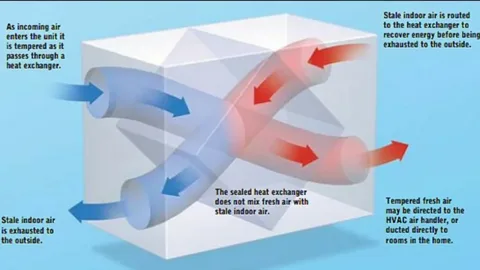
Heat exchangers transfer heat between two or more fluids (liquids, vapours, or gases) without mixing them. They are widely used in various industries, including HVAC systems, automotive, chemical processing, and power generation. The primary function of a heat exchanger is to improve energy efficiency by recovering or redistributing thermal energy. There are various heat exchangers, each tailored to specific applications, such as energy recovery, heating, cooling, and ventilation systems. In this detailed guide, we’ll explore different types of heat exchangers and their applications, including energy recovery heat exchanger and heat vents.
What is a Heat Exchanger?
At its core, a heat exchanger facilitates heat transfer between two fluids at different temperatures. The fluids are typically separated by a solid barrier to prevent mixing, and the heat is transferred through the barrier. This technology is essential in many energy-efficient systems, such as heating, ventilation, and air conditioning (HVAC), to reduce energy consumption and improve environmental sustainability.
There are various heat exchangers, such as plate heat exchangers, shell-and-tube heat exchangers, and air-to-air heat exchangers, each designed for different applications. The choice of heat exchanger depends on several factors, including the type of fluids involved, temperature differences, and the application’s energy recovery requirements.
Energy Recovery Heat Exchangers
Energy Recovery Heat Exchangers play a crucial role in energy conservation by capturing waste heat from one system and transferring it to another for reuse. This process significantly reduces energy consumption, making these exchangers vital to modern HVAC systems and industrial processes.
Working Principle of Energy Recovery Heat Exchangers
In an energy recovery heat exchanger, two air streams—one from the exhaust and one fresh—pass through the exchanger. The heat from the outgoing exhaust air is transferred to the incoming fresh air. This transfer of heat results in energy savings, as the incoming air doesn’t require as much heating or cooling.
Advantages:
- Energy Efficiency: These exchangers reduce the need for additional heating or cooling by recovering waste heat.
- Cost Savings: Energy recovery heat exchangers help reduce operational costs by lowering energy consumption.
- Sustainability: Using less energy leads to a reduction in carbon emissions, contributing to environmental protection.
Applications of Energy Recovery Heat Exchangers
- Commercial Buildings: HVAC systems in commercial settings use energy recovery heat exchangers to maintain indoor air quality and reduce energy consumption.
- Industrial Processes: Many industries use these systems to capture heat from waste and improve efficiency.
- Residential HVAC Systems: Home ventilation systems increasingly incorporate energy recovery heat exchangers to enhance comfort and energy efficiency.
Home Air Heat Exchanger
A Home Air Heat Exchanger is a device that ensures efficient heat transfer between indoor and outdoor air while maintaining air quality in residential environments. These heat exchangers are designed to remove stale indoor air and replace it with fresh outdoor air without losing the conditioned temperature, whether hot or cold.
How Home Air Heat Exchangers Work
The heat exchanger in a home air system allows warm indoor air to be vented outside while transferring its heat to the incoming fresh air. Similarly, in warm climates, it helps expel hot indoor air while bringing in cooler outside air. This reduces the energy required to maintain a comfortable indoor temperature.
Benefits of Home Air Heat Exchangers
- Improved Indoor Air Quality (IAQ): By constantly replacing stale air with fresh air, these systems help improve indoor air quality, essential for maintaining health and comfort.
- Energy Efficiency: As the heat from the exhaust air is used to precondition the incoming fresh air, less energy is required for heating or cooling.
- Comfort: These systems maintain a balanced indoor climate by efficiently managing temperature and humidity levels.
Common Uses
- New Homes: Many newly constructed homes incorporate air heat exchangers to ensure energy-efficient ventilation systems.
- Retrofit Projects: Older homes being upgraded for energy efficiency often install home air heat exchangers as part of an HVAC system improvement.
- Energy-Efficient Homes: Homes designed to meet green building standards use air heat exchangers to minimize energy waste.
Heat Recovery Air Exchanger
A Heat Recovery Air Exchanger is designed to capture heat from the air expelled from a building and transfer it to the incoming air. This helps maintain the indoor temperature while improving energy efficiency. These systems are beneficial in environments where indoor air quality and temperature control are essential.
The Function of am Air Exchanger
In an air exchanger, the air expelled from the building passes through a series of plates or tubes where heat is transferred to the cooler incoming air. This process ensures that the indoor environment stays at a stable temperature without using excessive energy for heating or cooling.
Critical Benefits of Heat Recovery Air Exchangers
- Energy Efficiency: By using the heat from exhaust air to pre-warm or cool the incoming air, these systems drastically reduce energy consumption.
- Improved Air Quality: Heat recovery systems constantly bring in fresh outdoor air, improving indoor air quality.
- Reduced HVAC Load: Since the incoming air is preconditioned, the HVAC system doesn’t have to work as hard to maintain a stable indoor climate.
Common Applications
- Residential HVAC Systems: Many homes use heat recovery air exchangers as part of their ventilation systems to maintain energy efficiency.
- Commercial Buildings: Office buildings and retail spaces incorporate these systems to ensure good air quality and reduce energy costs.
- Green Buildings: Buildings designed to meet high environmental standards often utilize heat recovery air exchangers to minimize energy consumption.
Fresh Air Heat Exchanger
A Fresh Air Heat Exchanger is designed to bring fresh outdoor air into a building while reducing energy loss. These systems are vital for maintaining high indoor air quality, especially in tightly sealed or highly insulated buildings where ventilation can be challenging.
How Fresh Air Heat Exchangers Work
The primary function of a fresh air heat exchanger is to transfer heat between the stale indoor air being vented outside and the fresh outdoor air being brought in. During the winter, the system transfers heat from the outgoing warm air to the incoming cold air, while in the summer, it helps cool the incoming air.
Benefits of Fresh Air Heat Exchangers
- Better Ventilation: Fresh air heat exchangers constantly bring in outdoor air, which improves air quality inside the building.
- Energy Efficiency: By preconditioning the incoming air, these systems reduce the energy needed for heating or cooling.
- Comfort Control: Fresh air heat exchangers maintain a more stable indoor temperature, reducing the workload on HVAC systems.
Uses of Fresh Air Heat Exchangers
- Residential Ventilation Systems: Fresh air heat exchangers are commonly used in homes to ensure proper ventilation without compromising energy efficiency.
- Commercial HVAC Systems: These systems help maintain indoor air quality and comfort in office buildings and other commercial spaces.
- Tight Buildings: Well-insulated and tightly sealed buildings often rely on fresh air heat exchangers to bring in outdoor air and expel indoor pollutants.
Heat Exchanger Vent
A Heat Exchanger Vent is an essential component in HVAC (Heating, Ventilation, and Air Conditioning) systems that allows for proper air circulation through the heat exchanger. It serves two primary functions: expelling stale air and introducing fresh air into the system. This process not only maintains the desired indoor air quality but also contributes to a more balanced indoor temperature. By ensuring that air moves efficiently through the heat exchanger, the vent helps to optimize the overall system performance, leading to improved energy efficiency and comfort within the building.
Importance of a Heat Vent
The vent is critical to the function of a heat exchanger, as it facilitates the continuous exchange of indoor and outdoor air. Without a properly functioning vent, stale air would accumulate inside the building, causing poor air quality and reducing the efficiency of the heat exchanger. Moreover, without adequate ventilation, the system might need to work harder to maintain a comfortable temperature, leading to increased energy consumption and potential wear and tear on the system. Therefore, a heat vent is key to the long-term efficiency and performance of an HVAC system.
Benefits of a Proper Heat Vent
Improved Airflow: A well-maintained heat vent ensures that air can flow freely through the system, improving heat transfer and overall system efficiency.
Energy Efficiency: By allowing proper air circulation, the vent helps maintain optimal heat exchanger performance, reducing the system’s energy consumption and lowering utility costs.
Enhanced Indoor Air Quality: A functioning vent removes stale, contaminated air and replaces it with fresh outdoor air, reducing indoor pollutants and contributing to a healthier living or working environment.
Common Applications
Residential HVAC Systems: Heat exchanger vents are a crucial part of home ventilation systems. They help ensure proper airflow, which improves energy efficiency and maintains indoor air quality, leading to a more comfortable living space.
Commercial HVAC Systems: In office buildings and commercial spaces, heat exchanger vents play a pivotal role in ensuring that the HVAC system operates efficiently. Proper ventilation contributes to a productive and comfortable environment for employees and customers.
Industrial Processes: In industrial settings, heat exchanger vents are integral to controlling airflow and maintaining the efficiency of large-scale heat recovery systems. These vents are often used to support processes that generate heat, ensuring that energy is recovered and reused effectively.
In conclusion, a properly functioning heat vent is vital for the efficiency and longevity of HVAC systems across residential, commercial, and industrial applications. Regular maintenance of the vent can lead to improved performance, energy savings, and healthier indoor environments.
Conclusion
Heat exchangers are essential devices that play a crucial role in energy conservation, ventilation, and temperature control across various applications. These devices, from industrial processes to residential HVAC systems, help reduce energy consumption, improve indoor air quality, and ensure comfort by efficiently transferring heat between fluids or air streams. Key variations such as energy recovery heat exchangers, home air heat exchangers, heat recovery air exchangers, fresh air heat exchangers, and heat exchanger vents serve specific functions that enhance overall system performance.
In today’s world, where energy efficiency and environmental sustainability are becoming increasingly important, heat exchangers are vital components in modern building systems and industrial processes. Choosing the correct type of heat exchanger for your specific application can improve efficiency, reduce costs, and contribute to a greener planet.
FAQs
What is the purpose of a heat exchanger?
A heat exchanger transfers heat between two or more fluids without mixing them, improving energy efficiency in HVAC, industrial processes, and automotive systems.
How does an energy recovery heat exchanger work?
An energy recovery heat exchanger transfers heat between exhaust air and incoming fresh air in HVAC systems, reducing the need for additional heating or cooling.
What is the difference between a home air heat exchanger and a heat recovery air exchanger?
A home air heat exchanger improves indoor air quality by exchanging heat between indoor and outdoor air, while a heat recovery air exchanger emphasizes energy recovery by capturing heat from exhaust air.
How does a fresh air heat exchanger improve indoor air quality?
A fresh air heat exchanger continuously brings fresh outdoor air while expelling stale indoor air, ensuring better ventilation and reducing indoor pollutants.
Why is a heat exchanger vent important?
A heat exchanger vent ensures proper airflow through the system, expelling stale air and bringing in fresh air. This improves the heat exchanger’s efficiency and enhances indoor air quality.