The use of floral tape in the creation and arrangement of artificial flowers
Introduction
Floral arrangements bring life and beauty to any space, but the magic behind them often lies in the tools we use. One such tool that deserves a spotlight is floral tape. This unassuming material plays a vital role in crafting stunning artificial flower designs. Whether you’re creating elaborate bouquets or charming floral crowns, understanding how to work with floral tape can elevate your creations beyond ordinary.
As you dive into this colorful world of faux blooms, you’ll discover the history and various types of floral tape available today. Each type serves its purpose while allowing for creativity and customization in your projects. Let’s unravel these mysteries together and explore innovative techniques that will transform your artificial flower arrangements into breathtaking works of art!
History of Floral Tape
Floral tape has a fascinating history that dates back to the early 20th century. Originally designed for the floral industry, its invention revolutionized flower arrangements. Before floral tape, florists relied heavily on wires and adhesives.
As artificial flowers gained popularity in the mid-century, so did specialized tools like floral tape. The innovative material allowed artists to create more intricate designs without compromising durability or aesthetics.
Initially made from paper with a waxy coating, floral tape’s function was straightforward: it helps secure stems together while providing a natural look. Over time, manufacturers began experimenting with different materials and finishes.
Today’s market offers various types of floral tapes catering to diverse needs. From crepe to cloth options, each type serves unique purposes in crafting and arranging faux flowers beautifully and effectively. This evolution reflects both technology advances and creative expression within the world of floristry.
Types of Floral Tape
Floral tape comes in several varieties, each offering unique benefits. Understanding these types can elevate your floral arrangements significantly.
Paper floral tape is a popular choice for many crafters. It’s lightweight and easy to manipulate. This type of tape adheres well to itself, making it perfect for wrapping stems tightly.
Crepe floral tape has a stretchy quality that allows it to conform easily to various shapes. Its textured surface makes it ideal for adding dimension and flair to your projects.
Cloth floral tape offers durability and flexibility. It provides a more robust hold and is often used in professional floral design settings where stronger reinforcement is needed.
Choosing the right type of floral tape depends on your project needs. Each variety enhances creativity while ensuring stability in artificial flower arrangements.
Paper Floral Tape
Paper floral tape is a versatile choice for both beginners and seasoned florists. Made from fine paper, it is lightweight yet durable. This type of tape comes in various colors, allowing easy customization for any project.
One standout feature of paper floral tape is its ability to stretch when pulled gently. This elasticity helps create smooth wraps around stems or wires without tearing easily. It adheres well to itself, forming a secure bond that keeps arrangements intact.
Another benefit lies in its eco-friendly nature. Paper floral tape breaks down more readily than plastic alternatives, making it an environmentally conscious option.
Whether you’re designing bouquets or securing artificial flowers together, this material offers endless possibilities for creativity and style. The aesthetic appeal combined with functionality makes it a staple in the world of floral design.
Crepe Floral Tape
Crepe floral tape is a versatile tool loved by many crafters. Its unique texture allows for easy manipulation, making it ideal for various projects.
This type of tape stretches and shapes beautifully when pulled, conforming to different forms with ease. It’s perfect for wrapping stems or creating intricate designs.
Available in numerous colors, crepe floral tape can enhance the visual appeal of your arrangements. Whether you’re crafting a bouquet or adding flair to an artificial flower display, this tape offers endless possibilities.
What sets crepe floral tape apart is its lightweight nature. This ensures that your creations maintain their elegance without feeling bulky or heavy.
Using crepe floral tape also provides durability to your art pieces. Once applied correctly, it holds securely while allowing flexibility for adjustments as needed.
Cloth Floral Tape
Cloth floral tape is a versatile tool for any crafter or florist. Its fabric-like texture provides both flexibility and strength, making it ideal for various projects.
One of its standout features is its ability to adhere well without losing elasticity. This means you can manipulate the tape around curves and angles with ease. It’s perfect for securing stems together while still allowing some movement.
The color options are abundant, enabling customization that matches your design aesthetic. Whether you’re crafting delicate bouquets or bold arrangements, cloth floral tape elevates your creations.
For those looking to add a touch of elegance, this type of tape can be easily incorporated into floral crowns too. Simply wrap it around wire stems or use it as an accent in bouquets for a sophisticated finish. The possibilities are endless when you harness the potential of cloth floral tape in your artistic endeavors.
Techniques for Using Floral Tape
Floral tape is a versatile tool that every floral designer should master. One effective technique involves wrapping the tape around the stems of artificial flowers. Start at the base and work your way up, ensuring you stretch the tape slightly as you go. This creates a secure hold and adds an elegant finish.
You can also use floral tape to bundle multiple stems together. Simply align them side by side and wrap tightly with the tape, making sure they are firmly secured but not too tight to avoid breakage.
For those using floral wire, covering it with floral tape enhances both aesthetics and functionality. As you wrap, ensure each layer overlaps slightly for a seamless look. This method camouflages any metallic shine while providing added support for your creations.
Experimenting with different techniques will yield stunning results in your arrangements!
Securing Stems Together
Securing stems together is a fundamental technique in floral arrangement. It provides stability and structure to your creations, ensuring they stand tall.
Begin by gathering the stems you want to combine. Hold them tightly at their base, making sure they align properly for an aesthetically pleasing look.
Now, take your floral tape and stretch it slightly as you wrap it around the joined stems. This stretching activates the adhesive properties of the tape, allowing it to stick better.
Wrap multiple times for added security. The key is not just in securing but also ensuring that each layer covers any gaps between the stems.
This method creates a neat appearance while enhancing durability. With practice, you’ll find this task becomes second nature as you explore various arrangements with ease.
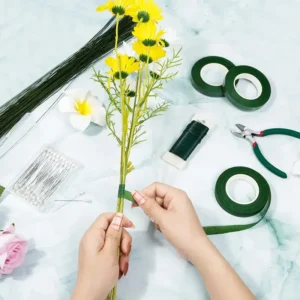
Covering Wire Stems
Covering wire stems is a simple yet effective technique that enhances the aesthetic appeal of artificial arrangements. Floral tape is your best ally for this task. It easily adheres to metal or plastic without slipping.
Start by cutting your floral wire to the desired length. Place the end of the tape at the base and start wrapping tightly, overlapping slightly as you go. This not only gives a polished look but also adds stability.
Choose colors that complement your flowers or match your overall theme. The right shade can elevate an arrangement from ordinary to stunning in no time.
Once wrapped, you can add decorative elements like ribbons or additional foliage around it for more flair. The result? A seamless blend of nature-inspired beauty with durability, making each piece uniquely yours.
Creative Applications of Floral Tape
Floral tape is a versatile tool that extends beyond traditional flower arrangements. One of its most charming applications is in creating floral crowns, perfect for festivals or special occasions. Wrap the tape around wire to form a sturdy base and easily attach fresh or artificial blooms.
Another creative use involves designing bouquets with an artistic twist. Use floral tape to bind stems together securely while adding structure and support. This allows for dynamic shapes and styles, giving your bouquet personality.
Incorporating different colors of floral tape can enhance your designs further. Layering it alongside ribbons creates visual interest, making each arrangement unique.
Whether you’re crafting home decor or personalized gifts, the possibilities are endless with this simple yet effective material. Let your creativity flow as you explore new ways to utilize floral tape in your projects!
Creating Floral Crowns
Creating floral crowns is a delightful way to showcase your creativity. These stunning accessories can elevate any outfit, making them perfect for weddings or festivals.
Start by gathering your favorite artificial flowers along with some sturdy floral wire. Fashion the wire into a circular base that fits comfortably around your head.
Next, cut the stems of the flowers to about three inches long. This length allows easy attachment without overwhelming the crown’s design.
Begin attaching each bloom using floral tape, wrapping it securely around both stem and wire. Layering different colors and sizes adds depth and personality to your creation.
Don’t forget about foliage! Greenery can break up bold colors while providing balance.
Add a touch of flair with ribbons or additional embellishments for that extra pop. The result will be a beautiful floral crown that’s uniquely yours.
Designing Bouquets
Designing bouquets with floral tape can elevate your arrangements to new heights. It allows for greater flexibility and creativity in how you combine different elements. By using floral tape, you can securely bind various stems together, creating a cohesive look that’s easy to handle.
Begin by selecting a variety of flowers and greenery that complement each other. Once you have your desired arrangement laid out, use the floral tape to wrap around the stems tightly. This not only holds them together but also provides additional support as you shape the bouquet.
Another advantage of using floral tape is its ability to conceal any wires or less attractive parts of artificial flowers. When crafting a bouquet, it’s common to work with wired blooms; wrapping those wire stems with floral tape ensures they remain hidden from view, giving your arrangement a polished appearance.
Consider adding ribbons or decorative accents once you’ve secured everything in place. Floral ribbon offers an excellent finishing touch while enhancing texture and style. The combination of floral tape and ribbon creates stunning visual interest in your designs.
When experimenting with colors and textures in bouquets, don’t hesitate to let your imagination run wild! With practice and experimentation using both floral wire and flower tapes, you’ll create unique arrangements that reflect personal style effortlessly.
Embrace the versatility of these tools on your next crafting project; it opens up countless possibilities for beautiful creations!