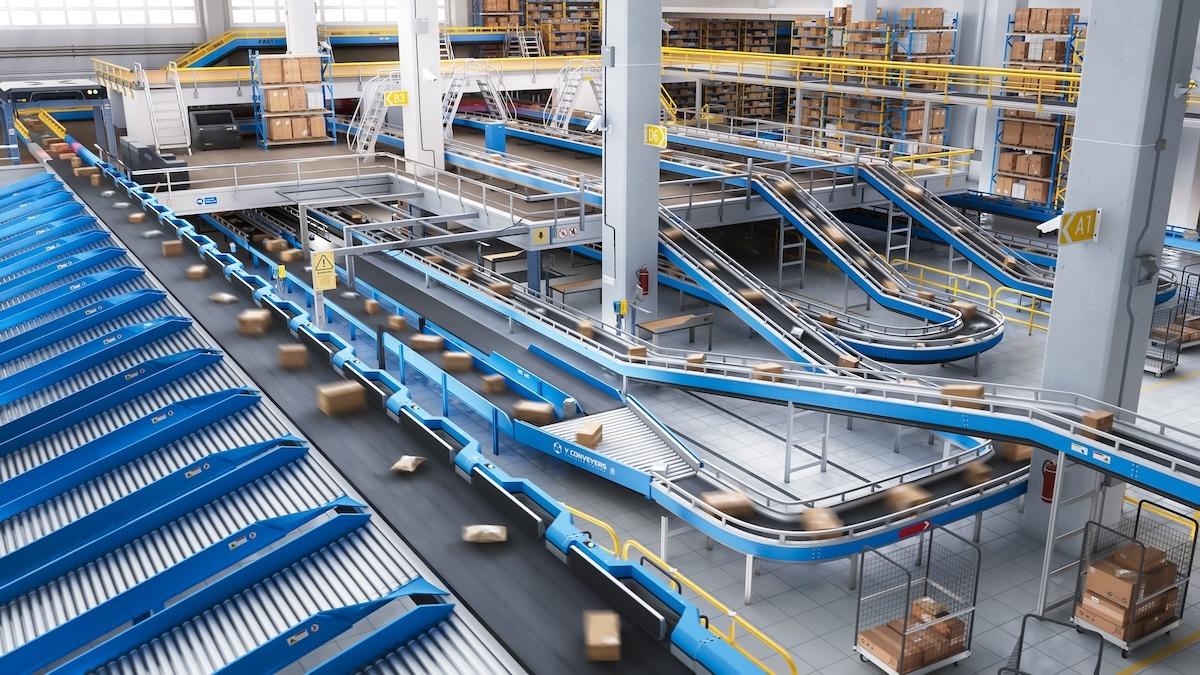
Warehouses are rarely static. Demand changes week by week, and floor space is constantly under pressure. One month may bring a steady flow of orders, and the next may be peak season with trucks lining up at the dock. In these environments, a flexible conveyor provides the adaptability that fixed systems cannot match. Mobility, scalability, and seasonal demand handling make these conveyors an essential tool for modern operations.
Mobility: Moving Where the Work Happens
Traditional conveyors are fixed in place. They require permanent layouts and take up valuable floor space even when not in use. A flexible conveyor, on the other hand, is designed to move. Most are mounted on casters, allowing workers to roll them to loading docks, packaging areas, or temporary work zones.This mobility enables conveyors to be brought to the product, eliminating the need for workers to move items long distances. When a truck arrives, the conveyor can extend directly inside the trailer for faster loading and unloading. When the task is complete, it can be collapsed and rolled out of the way.
Supporting equipment like roller stands makes this setup even more versatile. Stands can hold conveyor sections at different heights or angles, ensuring that packages move smoothly across changing elevations. Together, mobile conveyors and roller stands make it possible to adjust layouts in minutes.
Scalability: Growing with Demand
Warehouses rarely stay the same size forever. New product lines, changing customer expectations, and business growth all place pressure on existing systems. Fixed conveyors can be difficult to expand or reconfigure, often requiring new construction or costly retrofits.A flexible conveyor solves this problem by design. Units can be connected end to end, lengthening the conveyor line as demand increases. When less capacity is needed, sections can be collapsed or stored. The ability to scale up or down without major construction allows warehouses to respond quickly to shifting needs.Scalability is also about adjusting to product size and weight. Flexible conveyors often use skate wheels or rollers that can handle a wide variety of cartons and totes. With the right roller stands, operators can even create curves or elevation changes to match the layout of the warehouse floor. This adaptability saves both time and money.
Seasonal Demand Handling
Retailers and distributors know that holiday seasons or sales events can double or triple order volumes. Building a warehouse system for year-round peak demand is inefficient and costly. Instead, many operations prepare for these spikes with equipment that can expand temporarily.A flexible conveyor is ideal for this. During peak seasons, multiple units can be deployed at once, extending into trailers or connecting temporary workstations. When the surge ends, the conveyors can be collapsed and stored compactly until they are needed again.This approach keeps permanent infrastructure lean while still giving warehouses the ability to handle seasonal spikes without chaos. Workers can adapt quickly, trucks can be turned around faster, and customers receive their orders on time.
Worker Efficiency and Safety
Mobility, scalability, and seasonal flexibility all come back to one central benefit: workers can do their jobs more efficiently and safely. Instead of carrying boxes across long distances, employees can position a flexible conveyor to reduce lifting and walking. This lowers fatigue and the risk of injury. Adding roller stands provides better ergonomics, since conveyors can be adjusted to the right working height. Packages flow smoothly, workers maintain better posture, and the overall pace of work improves. These small adjustments add up to significant savings in labor costs and fewer workplace injuries.
Space Optimization
Warehouse space is expensive. Every square foot counts. Because flexible conveyors collapse when not in use, they occupy far less storage space than fixed conveyors, units can be nested against a wall or stored in a corner until they are needed again.This flexibility allows warehouses to keep aisles clear and maximize open floor space for other tasks. In fast-changing environments like e-commerce fulfillment centers, this agility is critical for keeping operations flowing smoothly.
Key Benefits at a Glance
To summarize, a flexible conveyor provides:
- Mobility: Easy movement to loading docks, trailers, or work zones.
- Scalability: Length and layout can grow with demand.
- Seasonal adaptability: Expands during peak demand, collapses during off-peak times.
- Worker safety: Reduces heavy lifting and improves ergonomics with roller stands.
- Space savings: Compact storage when not in use.
Warehouses are dynamic environments that must respond to shifting volumes, layouts, and customer expectations. A flexible conveyor is built for that reality. With mobility to move where it is needed, scalability to grow with demand, and adaptability for seasonal peaks, it offers a level of versatility that fixed conveyors cannot. Supported by roller stands for smooth transitions and ergonomic setups, these systems improve efficiency, protect workers, and make the most of valuable warehouse space. For facilities facing unpredictable workloads and constant change, flexibility is not just helpful. It is essential.