Mobile apps have evolved from optional features to essential business tools in 2025. With more than 6.8 billion smartphone users worldwide and mobile commerce making up 73% of total e-commerce sales, businesses can’t afford to ignore mobile app development.
But the question isn’t whether you need an app, it’s about choosing the right development approach. The debate between native vs. hybrid apps has become more complex as technology advances and user expectations rise. Both have unique strengths and weaknesses, and the right choice can directly impact your digital strategy, customer experience, and long-term success.
What Are Native Apps?
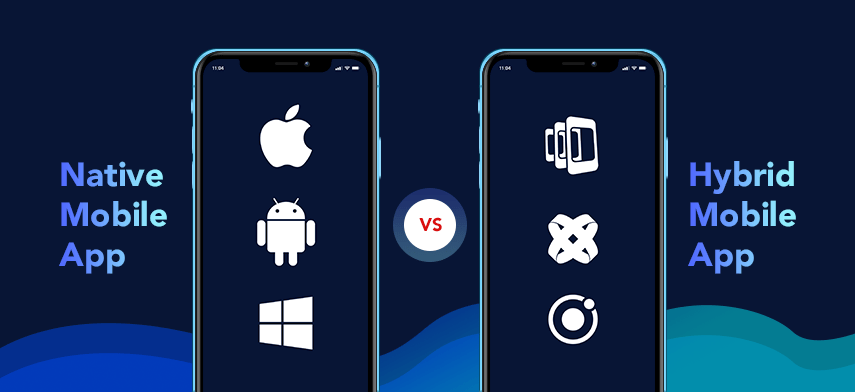
Native apps are developed specifically for a single operating system. For iOS, developers use Swift or Objective-C with Xcode, while for Android, they rely on Java or Kotlin with Android Studio. These apps are tightly integrated with their platforms and can access device features like GPS, camera, push notifications, and accelerometers without limitations.
The result is a highly optimized app that feels perfectly aligned with the device’s operating system. Native apps are known for smooth performance, fast loading times, and a polished user experience. However, since they require separate codebases for iOS and Android, development costs and timelines are generally higher.
What Are Hybrid Apps?
Hybrid apps combine elements of both native and web applications. They’re built using web technologies such as HTML5, CSS, and JavaScript, and then wrapped in a native container. This allows them to be distributed through app stores while still having access to certain device functions.
Modern frameworks like React Native, Flutter, Ionic, and Xamarin have significantly improved hybrid app performance, offering near-native speed in many scenarios. The main advantage of hybrid apps is their code reusability. Developers can write most of the logic once and deploy across multiple platforms, saving time and money.
Still, hybrid apps often require plugins or bridges to connect with device features, which can sometimes limit performance in complex or graphics-heavy applications.
Performance & User Experience
Performance is often the deciding factor when comparing native and hybrid apps. Native apps consistently lead because they are compiled specifically for one platform and have direct access to hardware resources. This results in faster load times, smoother animations, and better responsiveness.
Hybrid apps have narrowed the gap, especially with frameworks like Flutter and React Native. However, apps with complex animations, 3D graphics, or resource-heavy operations still run more efficiently on native platforms.
From a user experience perspective, native apps also have the advantage of adhering to platform-specific design guidelines, making them feel more natural to users. Hybrid apps can still offer good experiences but require extra effort to replicate native design conventions across platforms.
Cost & Development Time
For many businesses, the budget and timeline are critical factors. Hybrid development offers a clear advantage here, as most of the codebase can be shared across platforms. This allows businesses to reach both iOS and Android audiences with 60–70% less development effort compared to native apps.
Native development, on the other hand, requires two separate teams or developers skilled in different technologies. This makes it more expensive and time-consuming. However, this investment often pays off with higher-quality applications, better performance, and greater user retention.
Maintenance & Updates
Both native and hybrid apps require ongoing maintenance for bug fixes, new features, and security patches. The key difference lies in how updates are managed.
- Native Apps: Updates must be rolled out separately for iOS and Android, which can take longer but usually integrates smoothly with the operating system.
- Hybrid Apps: Maintenance is easier since most changes only need to be made once and can be applied across platforms. However, they may face compatibility issues if frameworks or plugins lag behind operating system updates.
Scalability & Future-Proofing
Scalability is another major factor in choosing between native and hybrid. Native apps are more suitable for businesses that expect high growth, complex workflows, or advanced functionality. They also gain faster access to new platform features whenever Apple or Google release updates.
Hybrid apps are scalable for many business needs, especially content-driven apps, e-commerce platforms, and utility tools. But when advanced platform-specific features or heavy processing are required, hybrid frameworks may not always keep up.

Best Use Cases
Not every app requires the same development approach. The right choice depends on business goals, audience, and functionality needs.
When to choose Native Apps:
- Performance-heavy apps like gaming or AR applications
- Financial, healthcare, or security-focused platforms
- Enterprise apps with complex workflows and data visualization
- Apps requiring advanced use of cameras, GPS, or sensors
When to choose Hybrid Apps:
- Content-driven apps such as blogs, news portals, and social media platforms
- E-commerce apps with standard features and UI patterns
- Startups needing quick, cost-effective multi-platform launches
- Business productivity tools with basic functionality
Choosing the Right Path for Your Business
The decision between native and hybrid apps should not be based on trends alone. Businesses need to carefully evaluate:
- Budget and timeline – Do you need a fast rollout or can you invest in quality long-term?
- Target audience – Which devices and platforms do your users prefer?
- Performance requirements – Will your app demand complex graphics or advanced integrations?
- Future plans – Is your app likely to scale into a feature-rich platform?
Working with a mobile app development company in Dubai can help align your technical decisions with both local market needs and global standards. A professional team should conduct a detailed requirement analysis, consider user demographics, and recommend whether native or hybrid best fits your goals.
Conclusion: Making the Right Decision in 2025
In 2025, both native and hybrid development approaches are powerful options,but for different reasons.
- Native apps remain the best choice for businesses that prioritize performance, security, and advanced features. They’re more costly but provide a superior user experience and better future-proofing.
- Hybrid apps are ideal for businesses that need fast, cost-effective development without compromising too much on performance. They’re particularly suited for startups and businesses with simpler use cases.
The most important step is to align your choice with your business strategy, target audience, and long-term objectives. By working with the right development partner, you can build an app that not only meets current needs but also scales for the future in an increasingly mobile-first world.