In the fast-paced world of modern retail, seamless operations are not just a competitive advantage—they’re a necessity. With growing demands for omnichannel fulfillment, real-time inventory tracking, and personalized customer experiences, retailers must rely on smarter systems to keep everything in sync. This is where Retail ERP systems come into play.
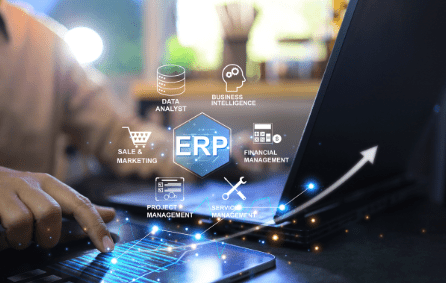
As the backbone of successful retail businesses, ERP (Enterprise Resource Planning) platforms connect core processes like sales, inventory, finance, CRM, supply chain, and analytics into a unified system. However, integrating an ERP system smoothly—especially in an environment shaped by evolving retail technology—can be challenging.
If you’re just beginning your digital transformation journey or want to explore how retail innovation can impact your operations, start with our detailed guide on what is retail technology and how it benefits retailers and marketers. You’ll understand the growing role of technology in streamlining workflows, improving customer engagement, and driving smarter decisions.
In this blog, we’ll explore the fundamentals of ERP in retail, common integration challenges, and proven tips for ensuring a smooth and effective rollout.
Why ERP Integration Matters in Retail
In today’s interconnected retail environment, siloed systems are a thing of the past. ERP solutions ensure that your business functions as one cohesive unit. From purchase orders and vendor management to real-time stock levels and employee scheduling, a well-integrated ERP can:
- Increase operational efficiency
- Reduce manual errors
- Improve customer service and personalization
- Offer centralized data visibility
- Enable data-driven decision-making
Retail in technology isn’t just about modern tools—it’s about how these tools work together to deliver a seamless business experience.
Key Retail Functions ERP Systems Can Integrate
Retail ERP platforms are designed to consolidate multiple systems under one umbrella. Here are the core business functions typically integrated:
🔹 Inventory & Warehouse Management
Track stock levels across multiple stores and warehouses in real-time, automate reordering, and optimize stock distribution.
🔹 Point of Sale (POS) Systems
Synchronize front-end sales data with backend operations to manage orders, customer profiles, and stock updates.
🔹 Supply Chain & Procurement
Streamline vendor management, procurement planning, and logistics to reduce costs and improve delivery timelines.
🔹 Customer Relationship Management (CRM)
Combine customer data from various touchpoints to create unified profiles, enabling personalized service and targeted promotions.
🔹 Finance & Accounting
Automate billing, payroll, tax calculations, and reporting to reduce human error and improve compliance.
🔹 E-commerce Integration
Connect your online store with backend systems for order processing, inventory updates, shipping, and returns—creating a truly omnichannel experience.
If you’re looking to integrate your ERP system with a modern e-commerce platform, our e-commerce development services at Valueans are tailored to deliver scalable, secure, and data-driven solutions that align with your ERP and retail goals.
Common Retail ERP Integration Challenges
Integrating ERP into your retail tech stack can bring many benefits—but only if done correctly. Here are some common pitfalls:
⚠️ 1. Incompatible Systems
Retailers often use legacy POS, inventory, or accounting systems that are incompatible with newer ERP platforms, leading to data silos.
⚠️ 2. Data Migration Issues
Migrating large volumes of historical data into a new ERP can cause disruptions if not planned and cleaned properly.
⚠️ 3. Lack of Real-Time Sync
Some systems only sync data in batches, causing delays and inaccuracies, especially in inventory and order tracking.
⚠️ 4. Employee Resistance or Lack of Training
Without proper onboarding, employees may resist new systems, causing drops in productivity.
⚠️ 5. Customization Complexity
Too much customization can lead to poor performance, higher costs, and more difficult upgrades in the future.
Integration Tips for a Smooth ERP Rollout
Let’s explore actionable tips that retailers can follow to ensure a seamless ERP integration:
✅ 1. Define Clear Business Goals First
Before implementing any system, outline what you want to achieve. Are you trying to reduce inventory shrinkage? Improve order fulfillment speed? Increase sales per customer? Having a clear vision will guide your system selection and integration priorities.
✅ 2. Choose a Retail-Focused ERP System
Not all ERP systems are built equally. Choose a solution specifically designed for retail, with built-in modules for POS, CRM, inventory, promotions, and supply chain.
Popular options for retail include:
- Microsoft Dynamics 365
- NetSuite for Retail
- SAP Business One
- Odoo
✅ 3. Prioritize Real-Time Data Synchronization
Ensure your ERP integrates in real time with your POS, inventory, and e-commerce systems. Real-time data prevents discrepancies in stock, pricing, and order statuses, which improves customer satisfaction and reduces errors.
✅ 4. Plan Your Data Migration Carefully
Data migration is often the most complex part of ERP integration. Clean and organize your existing data before the move. Remove duplicates, correct outdated information, and ensure consistency in formatting.
✅ 5. Train Employees Thoroughly
A smooth ERP rollout isn’t just about software—it’s about people. Provide comprehensive training tailored to roles, and offer ongoing support. Consider creating internal champions or super-users who can mentor others.
✅ 6. Integrate Your E-Commerce Platform Strategically
Your e-commerce store is one of the most important integration points. Orders, customer profiles, and inventory should sync automatically with your ERP to ensure timely fulfillment and accurate tracking.
Looking to build a smart and scalable e-commerce platform that integrates effortlessly with ERP systems? Explore our e-commerce development services to see how we help retailers create seamless omnichannel ecosystems.
✅ 7. Start Small, Then Scale
Avoid the temptation to implement every module at once. Start with core functionalities—like inventory and sales—then gradually integrate CRM, HR, and finance. This phased approach minimizes disruptions.
✅ 8. Monitor and Optimize Post-Implementation
Integration doesn’t end at launch. Track KPIs like order accuracy, stock discrepancies, sales trends, and employee productivity. Use this data to optimize workflows and identify areas for improvement.
Benefits of Well-Integrated Retail ERP Systems
When ERP integration is done right, retailers gain more than just efficiency—they gain a strategic edge. Key benefits include:
- Centralized control over all retail operations
- Improved customer experiences through better service and faster fulfillment
- Reduced operational costs via automation and real-time insights
- Scalability and flexibility to adapt to changing business needs
- Data-driven decision-making using unified dashboards and reporting tools
Future Trends: ERP + Retail Technology = Intelligent Commerce
As retail technology continues to evolve, ERP systems are becoming even smarter with AI and machine learning integration. Expect features like:
- Predictive analytics for inventory and demand forecasting
- Automated vendor negotiations
- Chatbots integrated with ERP for customer support
- IoT sensors feeding real-time data to ERP dashboards
- Blockchain for transparent supply chain management
The convergence of retail in technology and intelligent ERP is setting the stage for highly responsive, adaptive, and automated commerce.
Conclusion: Make ERP the Core of Your Retail Success
In the era of omnichannel commerce and digital transformation, a well-integrated ERP system isn’t just a tool—it’s the nerve center of your retail business. It brings your teams, systems, data, and channels together into a streamlined, scalable, and intelligent ecosystem.
Whether you’re a mid-size retailer scaling up or an enterprise brand optimizing operations, ERP integration is the foundation for retail success.
Want to understand how to align your retail operations with future-ready technology? Start with our expert guide on what retail technology is and how it benefits retailers and marketers, then explore how our e-commerce development services can help you build connected, intelligent, and customer-centric retail platforms.