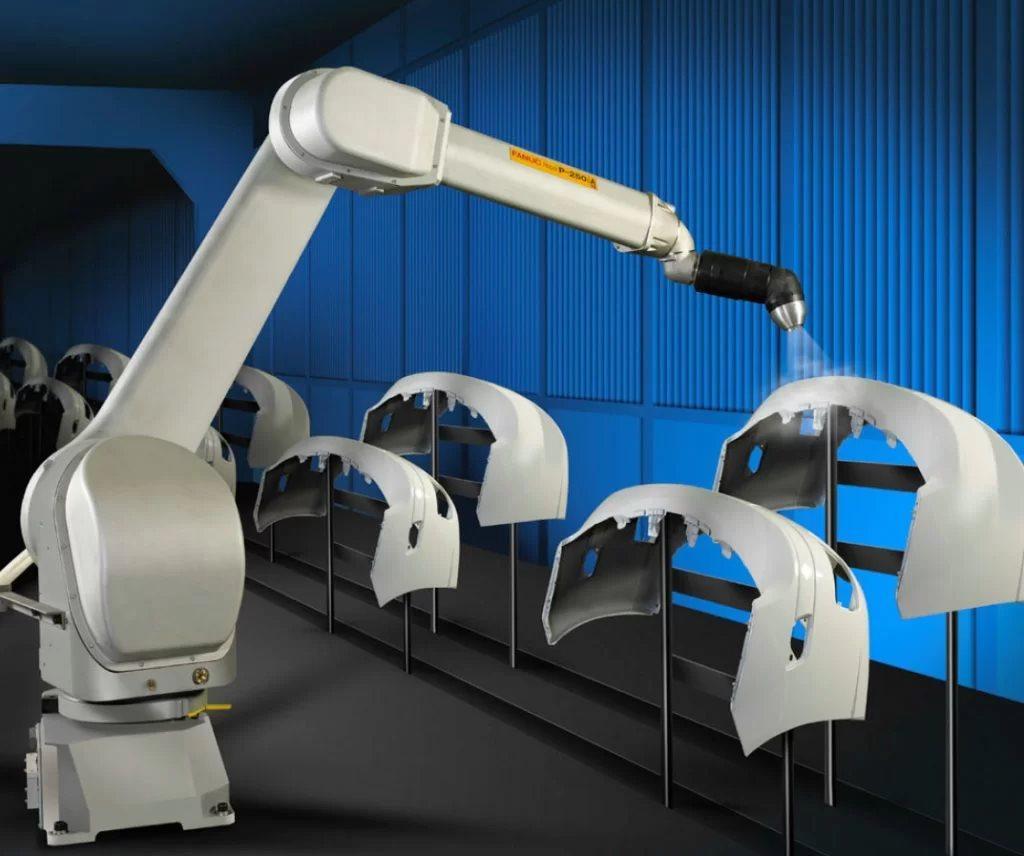
Types of Robotic Paint Sprayers
1. Fixed-Arm Robots
Fixed-arm robotic paint sprayers are stationary units designed to paint large surfaces with precision and consistency. These robots are commonly used in automotive and aerospace industries.
Features
- Stationary Design: Mounted in a fixed position, ideal for assembly line setups.
- High Precision: Capable of applying consistent coats with minimal deviation.
- Automation: Can be programmed for repetitive tasks, increasing efficiency.
2. Mobile Robots
Mobile robotic paint sprayers are designed to move around the workspace, providing flexibility in painting different objects and surfaces. These robots are often used in construction and large-scale manufacturing.
Features
- Mobility: Equipped with wheels or tracks for movement across various terrains.
- Versatility: Can adapt to different painting tasks and environments.
- Flexibility: Suitable for painting large and irregular surfaces.
3. Collaborative Robots (Cobots)
Collaborative robots, or cobots, are designed to work alongside human operators, enhancing productivity and safety. These robots are increasingly popular in various industries, including manufacturing and automotive.
Features
- Safety: Equipped with sensors to detect human presence and avoid collisions.
- Ease of Use: Simple to program and operate, even for non-experts.
- Flexibility: Can be easily integrated into existing workflows.
Benefits of Robotic Paint Sprayers
1. Consistent and High-Quality Finish
Robotic paint sprayers offer unparalleled consistency and precision in applying paint, ensuring a high-quality finish every time.
Advantages
- Uniform Application: Robots can maintain a consistent distance and speed, resulting in an even coat of paint.
- Precision: Advanced sensors and programming ensure precise application, reducing waste and rework.
- Smooth Finish: Eliminates brush strokes and roller marks, providing a professional-quality finish.
2. Increased Efficiency and Productivity
Robotic paint sprayers can operate continuously without fatigue, significantly increasing productivity and efficiency in painting operations.
Advantages
- Continuous Operation: Robots can work around the clock, increasing output and reducing downtime.
- Speed: Can paint large areas quickly, reducing project timelines.
- Repeatability: Robots can perform repetitive tasks with high accuracy, improving overall efficiency.
3. Safety and Reduced Labor Costs
Using robotic paint sprayers can enhance safety and reduce labor costs by minimizing the need for human intervention in hazardous environments.
Advantages
- Safety: Reduces exposure to harmful fumes and chemicals, protecting workers’ health.
- Cost Savings: Lowers labor costs by automating repetitive and labor-intensive tasks.
- Risk Reduction: Minimizes the risk of accidents and injuries associated with manual painting.
4. Flexibility and Versatility
Robotic paint sprayers are adaptable to various painting tasks and environments, making them suitable for a wide range of applications.
Advantages
- Adaptability: Can be programmed for different painting tasks, from small parts to large surfaces.
- Versatility: Suitable for use in various industries, including automotive, aerospace, and construction.
- Customizable: Robots can be equipped with different nozzles and tools to handle specific painting requirements.
Applications of Robotic Paint Sprayers
1. Automotive Industry
Robotic paint sprayers are extensively used in the automotive industry for painting cars, trucks, and other vehicles. They ensure a high-quality finish and increase production efficiency.
Applications
- Car Bodies: Provides a smooth, even coat on car bodies, enhancing their appearance and durability.
- Parts and Components: Paints smaller parts and components with precision.
- Assembly Lines: Integrated into assembly lines for continuous, high-speed painting.
2. Aerospace Industry
In the aerospace industry, robotic paint sprayers are used to apply protective coatings to aircraft, ensuring durability and corrosion resistance.
Applications
- Aircraft Exteriors: Provides a uniform, durable finish on aircraft exteriors.
- Components: Paints various aircraft components, including wings and fuselage sections.
- Maintenance: Used for repainting and maintenance tasks, ensuring long-term protection.
3. Construction and Architecture
Robotic paint sprayers are increasingly used in construction and architectural projects to paint large structures, such as buildings, bridges, and tunnels.
Applications
- Building Exteriors: Efficiently paints large building exteriors, reducing project timelines.
- Infrastructure: Applies protective coatings to bridges, tunnels, and other infrastructure.
- Interiors: Used for painting large interior spaces, such as warehouses and commercial buildings.
4. Manufacturing and Industrial Applications
In manufacturing and industrial settings, robotic paint sprayers are used to paint a variety of products, from household appliances to heavy machinery.
Applications
- Appliances: Provides a high-quality finish on household appliances, such as refrigerators and washing machines.
- Machinery: Paints industrial machinery and equipment, ensuring durability and corrosion resistance.
- Consumer Products: Used for painting consumer products, including electronics and furniture.
Challenges and Limitations
1. High Initial Investment
One of the main challenges of adopting robotic paint sprayers is the high initial investment required for purchasing and installing the equipment.
Challenges
- Cost: High upfront costs can be a barrier for small and medium-sized businesses.
- Return on Investment: Determining the ROI can be challenging, especially for businesses with low production volumes.
- Financing: Securing financing for such a significant investment can be difficult.
2. Technical Complexity
Operating and maintaining robotic paint sprayers requires specialized knowledge and skills, which can be a challenge for some businesses.
Challenges
- Training: Requires specialized training for operators and maintenance personnel.
- Maintenance: Regular maintenance and calibration are necessary to ensure optimal performance.
- Technical Support: Access to technical support and spare parts can be crucial for minimizing downtime.
3. Integration with Existing Systems
Integrating robotic paint sprayers into existing production lines and workflows can be complex and time-consuming.
Challenges
- Compatibility: Ensuring compatibility with existing equipment and processes can be difficult.
- Downtime: Integration may require temporary downtime, affecting production schedules.
- Customization: Customizing the robotic system to fit specific needs can be costly and time-consuming.
Future Trends in Robotic Paint Sprayers
1. Advancements in AI and Machine Learning
The integration of AI and machine learning into robotic paint sprayers is expected to enhance their capabilities, making them more efficient and adaptable.
Trends
- Smart Sprayers: AI-powered sprayers can optimize spray patterns and adjust settings in real-time for improved efficiency.
- Predictive Maintenance: Machine learning algorithms can predict maintenance needs, reducing downtime and extending equipment lifespan.
- Enhanced Precision: AI can improve the precision of robotic sprayers, ensuring even higher quality finishes.
2. Increased Use of Collaborative Robots (Cobots)
The use of collaborative robots in painting applications is expected to grow, offering new opportunities for human-robot collaboration.
Trends
- Safety: Cobots are designed to work safely alongside humans, reducing the risk of accidents.
- Flexibility: Easy to program and reprogram, making them suitable for a variety of tasks.
- Accessibility: Lower cost and easier integration make cobots accessible to smaller businesses.
3. Sustainable and Eco-Friendly Solutions
There is a growing focus on sustainability and eco-friendly practices in the painting industry. Robotic paint sprayers are being developed to support these initiatives.
Trends
- Low VOC Paints: Robots can apply low VOC (volatile organic compounds) paints efficiently, reducing environmental impact.
- Efficient Use of Materials: Advanced sprayers minimize overspray and waste, conserving paint and reducing costs.
- Energy Efficiency: Newer models are designed to be more energy-efficient, reducing overall environmental footprint.
Conclusion
Robotic paint sprayers are transforming the painting industry by offering unparalleled precision, efficiency, and versatility. From automotive and aerospace to construction and manufacturing, these advanced systems provide high-quality finishes and increased productivity across various applications. While the initial investment and technical complexity can pose challenges, the long-term benefits and potential for innovation make robotic paint sprayers a valuable addition to any modern painting operation. As technology continues to evolve, the future of robotic paint sprayers looks promising, with advancements in AI, collaborative robots, and sustainable solutions paving the way for even greater efficiency and environmental responsibility.
This article is posted on Expertsay.