The financial statement is very key in the making of major organizational decisions in the changing financial and business arena. The whole picture of the level of financial health, performance, and potential risks of a company requires extensive evaluation of financial data. Over the last few years, financial statement analysis witnessed revolutionizing changes on the technological front, one of them being the Artificial Intelligence (AI) and data analytics new era, apart from specially developed software solutions. The following article looks at the ways these technologies and tools are revolutionizing the process of analyzing financial statements with a specific focus on how they help delve deeper for insights, make informed decisions, and improve efficiency.
Besides, it gives insight into how these tools are used while analyzing a bank statement—a very important part of financial statement analysis.
The Rise of Technology in Financial Statement Analysis Most times, financial statement analysis is more or less dependent on manual processes, as they use a lot of spreadsheets and basic calculation techniques. But with the advent of AI and data analytics improvement, it was bound to happen, as it could be seen that the improvement was being made to provide better accuracy, speed, and depth in insights. Consider in detail the main technologies and tools changing the financial statement analysis.
1. Artificial Intelligence (AI): This is a new powerful tool in the analyze the financial statements, giving one more capability beyond human beings. Huge sets of financial data can be analyzed by AI algorithms to find patterns, trends, and anomalies in a predictive manner. Artificial intelligence can automate ratio calculations, trend analysis,json and can even predict future financial performance by looking at historical data.
2. Data Analytics: Data analytics encompasses a range of techniques used to analyze and interpret large datasets.Starting from the most basic descriptive analytics involving summarizing historical data to the most predictive and prescriptive analytics meant for future trends with informed recommendations, the data analytics tools are indeed very helpful at detailing insights pertaining to financial statements. This may include the various signs, monitored tendencies, and problems or opportunities which are to be looked for in a given business environment.
3. Software Solutions: The modern financial statement analysis has become dependent on the advent of specialized software solutions. Boasting very intuitive interfaces, these solutions also have refined functions and even reporting formats that are customizable. Some financial modeling software used to make scenario analysis or dashboard tools used for visual representation of data make it easier for analysis activities to help them become more adaptive in decision-making.
Leveraging AI, Data Analytics, and Software Solutions in Financial Statement Analysis
1. Automjsonly k. Automated Ratio Analysis:
AI-driven tools can automatically calculate and each a wide range of financial ratios from a balance sheet and income statement.Some of the essential ratios are: Liquidity Ratios (Current Ratio and Quick Ratio); Profitability Ratios (Return on Assets and Return on Equity); and Efficiency Ratios (Asset Turnover and Inventory Turnover), among others.
2. Trend analysis and forecasting:
AI algorithms find trends in the historic financial data and forecast future performance. In this regard, the tools help the analysts understand where the company is heading, making reasoned forecasts over the future of the company’s financial position based on patterns recognized from revenue growth, profitability margins, and expense trends.
3. Predictive Analytics for Risk Management:
AI and data analytics make predictive risk modeling available, which helps the analyst assess beforehand the probable risk and its impact on the financial statements. From these, the organization is able to set strategies that may help them in mitigating the risks at hand, which may include market, credit, and operational risks, among others, thus helping protect the financial health of the firm.
4. Frajson Detection and Anomaly Detection:
AI algorithms are good at fraud detection and understanding discrepancies in financial statements that may be indicative of fraud or errors. Some tools based on these algorithms are flagging any act of suspicion over data from transactions and expense patterns from the historical trends for further analyst investigation.
5. Natural Language Processing (NLP) in Textual Analysis:
Quite a number of statements within the financial statements themselves, such as the footnotes, management discussions, and the auditor’s report, are of textual nature and need NLP techniques for analysis. Advanced NLP tools with AI capabilities have great potential to extract tremendous insights from unstructured text, mostly underlying risks, disclosures, or important information impacting financial analysis.
6. Visualizations and Dashboards:
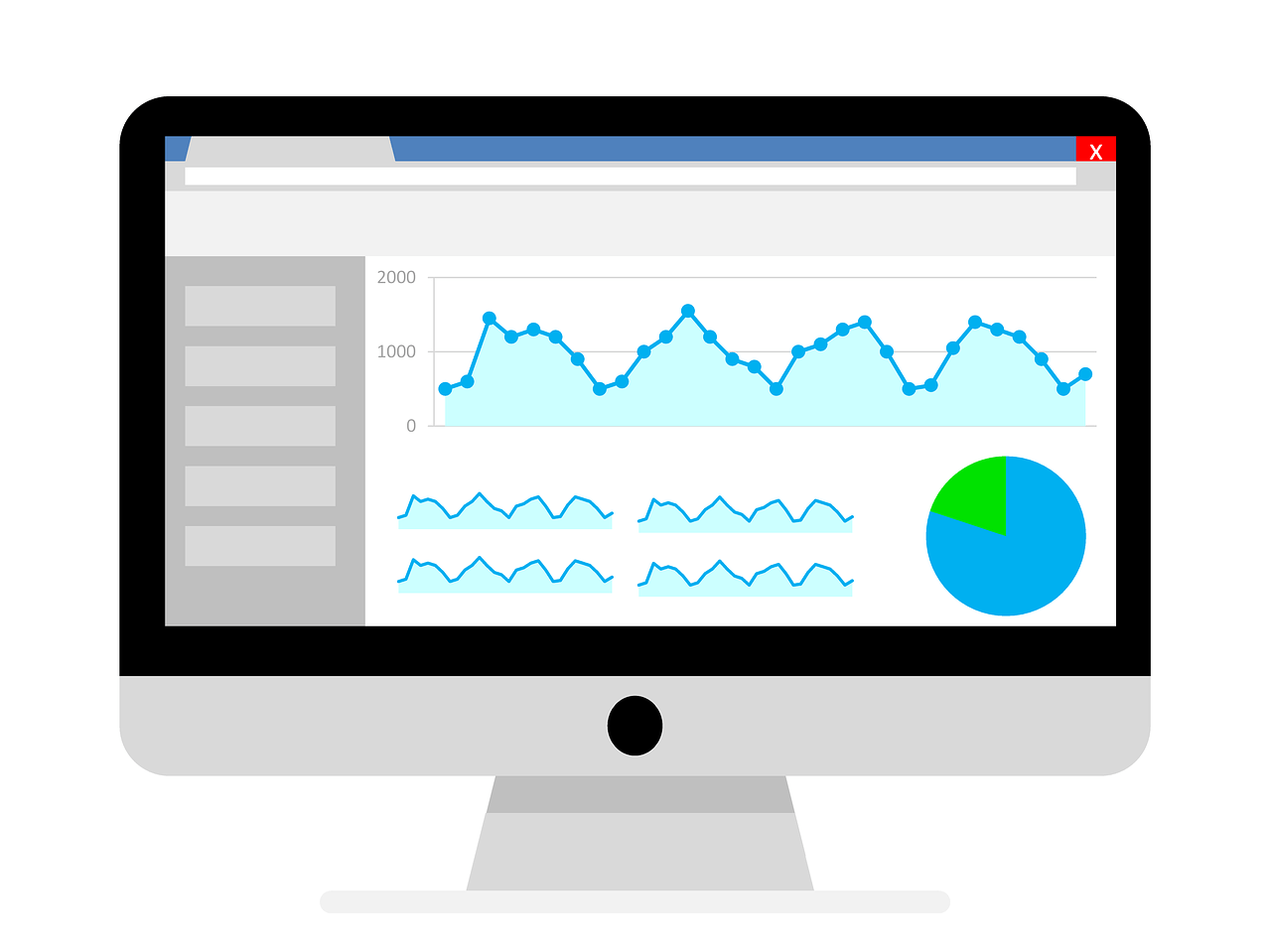
Software solutions offer interactive visualizations and dashboards to help present complex financial data in an easily understandable form. This software allows dynamic chart preparation, graphing, heatmaps, etc., so that the trend, comparison, outliers, etc., can be seen at a glance by the stakeholders for actionable insights.
7. Bank Statement Analysis:
It is a part of the financial statement analysis that deals with bank statements. It gives insight into the cash flow, liquidity, and financial transactions of the company. AI and data analytic tools can automate the process of analyse bank statement by categorizing transactions, spotting patterns of cash flow, and reconciling discrepancies. Case Studies: Real-World Applications of Technology in Financial Statement Analysis
DEF Consulting gives customers very keen details on the status of financial health, management of cash flows, and profitability through using AI tools to the financial statements. Its capabilities in scenario analysis give DEF Consulting the power to design business growth and sustainability strategies along with personalized recommendations to its customers.
Conclusion
The integration of AI data analytics, and software solutions changes the whole scenario of financial statement analysis, whereby it allows the businesses and organizations to do deeper digging for insight, informed decision making, and optimal profit generation. These all technologies make ratio analysis automatic and helpful in carrying out the trend analysis, prediction of future performance, and detection of risk and anomalies. It is in this respect that AI and data analytics tools feature prominently in the study of the bank statements for the insights that may be obtained from cash flow, liquidity, and transaction patterns. From this point of view, professionals using these new technologies will be able to easily manipulate complex financial data, identify opportunities that may be hidden within, and mitigate the risks linked to such data. In these changing dimensions of the financial industry, now the financial statement analysis will be more driven with efficiency, accuracy, and profitable decision-making processes in better ways.