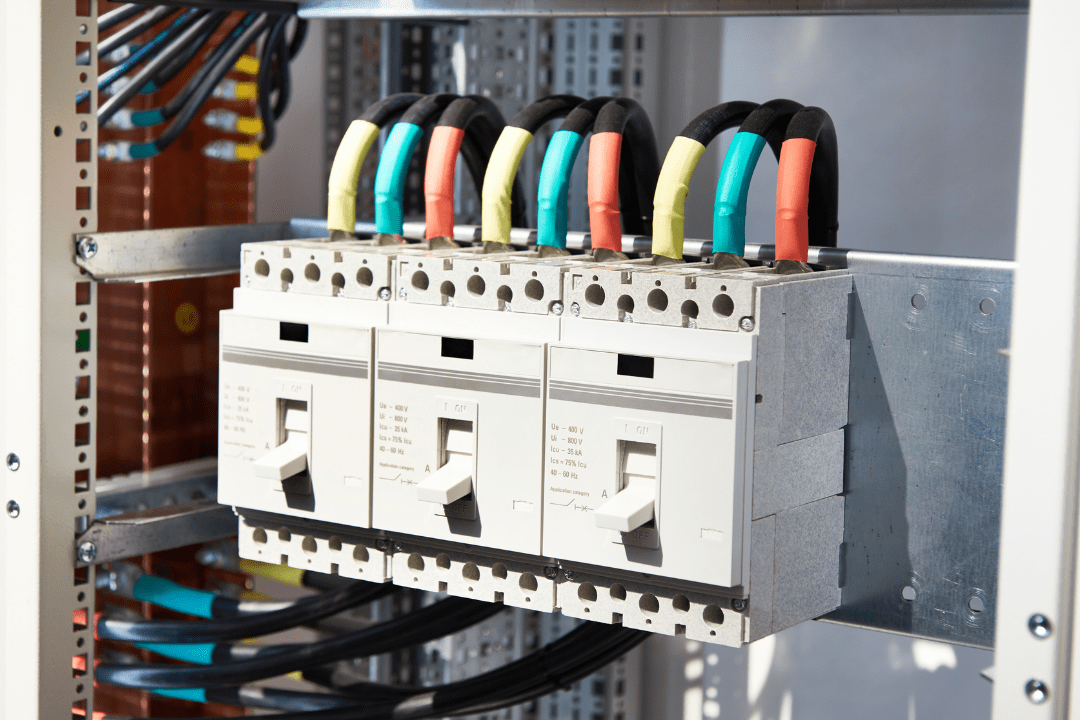
Industrial circuit breakers are essential components in any heavy-duty electrical system. They protect equipment, ensure safety, and help maintain uninterrupted power supply across industrial facilities. But before you rush to buy one, there are important factors to consider to ensure you select the right breaker for your specific needs.
In this article, we’ll explore everything you need to know about industrial circuit breakers—from their relationship with electrical power transformers and electrical transformers to how to work effectively with a trusted electrical parts supplier or electrical equipment suppliers to get the best product for your project.
Why Are Industrial Circuit Breakers So Critical?
Have you ever wondered why industrial facilities invest heavily in circuit breakers? These devices serve as the first line of defense against electrical faults by:
• Interrupting power flow during overloads or short circuits
• Protecting sensitive equipment like electrical transformers from damage
• Preventing fire hazards and ensuring personnel safety
• Maintaining system reliability and minimizing downtime
Understanding their vital role helps you appreciate why choosing the right breaker cannot be taken lightly.
What Are the Different Types of Industrial Circuit Breakers?
Before selecting a breaker, it’s important to know the common types available:
• Molded Case Circuit Breakers (MCCBs): Suitable for moderate voltage and current ratings; often used in industrial control panels.
• Air Circuit Breakers (ACBs): Designed for higher voltage and current, providing protection in electrical distribution systems.
• Vacuum Circuit Breakers (VCBs): Utilize vacuum interrupters for arc quenching, ideal for medium voltage applications.
• SF6 Circuit Breakers: Use sulfur hexafluoride gas for insulation, best suited for high voltage systems.
Knowing which type matches your application requirements is a fundamental step.
How Do Electrical Power Transformers and Circuit Breakers Work Together?
Have you considered how electrical power transformers and circuit breakers function as a team in industrial settings?
• Electrical transformers step up or step down voltage levels to ensure equipment receives power at the correct voltage.
• Circuit breakers protect these transformers and the entire distribution system by interrupting current during faults.
• Improper breaker selection can cause damage to transformers, leading to costly repairs or replacements.
Working with your electrical parts supplier to understand transformer specifications and coordinating breaker choices accordingly can prevent system failures.
What Key Factors Should You Consider Before Choosing an Industrial Circuit Breaker?
- Voltage and Current Ratings
• Does the breaker support the voltage level your system operates at?
• Can it handle the maximum current your equipment draws?
Choosing breakers rated too low risks nuisance tripping; rated too high may delay fault interruption.
- Interrupting Capacity
• What is the maximum fault current the breaker can safely interrupt?
• Is the capacity adequate for potential short-circuit scenarios in your system?
Always select breakers with interrupting ratings that exceed your system’s highest possible fault current.
- Coordination with Existing Equipment
• Does the breaker coordinate with upstream and downstream protection devices, including electrical transformers?
• Proper coordination ensures selective tripping, minimizing system-wide outages.
- Environmental Conditions
• Will the breaker be installed indoors or outdoors?
• Is it exposed to dust, moisture, or corrosive elements?
Choose breakers with appropriate enclosures and ratings (NEMA or IP) to withstand your environment.
- Compliance and Certifications
• Does the breaker meet local electrical codes and industry standards?
• Look for certifications from recognized bodies like UL, IEC, or ANSI.
Compliance guarantees safety and reliability.
How Can Electrical Parts Suppliers Help You Make the Right Choice?
Navigating technical specifications can be complex. Trusted electrical parts suppliers and electrical equipment suppliers can:
• Offer expert advice tailored to your project needs
• Provide access to a wide range of certified breakers and related components
• Help match breakers to your electrical transformers and system setup
• Assist with product documentation, installation guides, and warranty information
Partnering with knowledgeable suppliers simplifies the selection process and reduces risk.
Tips for Working with Electrical Equipment Suppliers
To maximize your supplier relationship, consider these tips:
• Provide Complete System Details: Share load calculations, transformer ratings, and existing protection schemes.
• Request Product Samples or Demos: Whenever possible, test components before purchase.
• Verify Delivery and Support Services: Ensure timely shipping and access to technical support.
• Ask About After-Sales Service: Reliable suppliers offer maintenance support and warranty handling.
• Compare Multiple Quotes: Evaluate prices without compromising quality.
Common Mistakes to Avoid When Selecting Industrial Circuit Breakers
• Ignoring Coordination with Transformers: Overlooking how breakers interact with transformers can lead to equipment damage.
• Choosing Based Solely on Price: Cheap breakers may fail prematurely or cause safety hazards.
• Neglecting Environmental Ratings: Installing indoor-rated breakers outdoors can result in corrosion and failure.
• Overlooking Certification Requirements: Non-certified breakers may violate regulations and void insurance.
Awareness of these pitfalls helps you make a safer, smarter investment.
How to Ensure Longevity and Reliability of Your Industrial Circuit Breakers?
• Schedule regular inspections and testing.
• Follow manufacturer guidelines for maintenance.
• Train staff on proper operation and emergency procedures.
• Keep spare breakers and parts on hand for quick replacements.
Maintaining your breakers preserves your entire electrical system’s integrity.
Conclusion
Choosing the right industrial circuit breakers is a vital step in safeguarding your facility’s electrical infrastructure. Understanding the interplay between electrical power transformers and breakers, considering voltage, current, and environmental factors, and ensuring compliance can dramatically improve system safety and reliability.
Moreover, working closely with experienced electrical parts suppliers and electrical equipment suppliers can simplify this complex process, offering access to quality products and technical expertise that align perfectly with your project requirements.
By doing your homework and partnering with the right suppliers, you not only protect your investment but also contribute to a safer, more efficient industrial operation. commercial motor controls